
EPA’s 2026 RMP Rule: What It Means for Refinery Safety and the Future of Alkylation
Updated: Mar 25
Access the complete technical analysis in seconds

A major regulatory shift is coming, and it could reshape refinery safety decisions
In February 2026, the U.S. Environmental Protection Agency introduced proposed changes to its Risk Management Program. At first glance, this may appear to be another routine regulatory update.
It is not.
The proposal represents a meaningful shift in how refinery safety is evaluated, particularly around Safer Technology and Alternatives Analysis, commonly referred to as STAA. It also directly impacts how the industry approaches hazardous alkylation technologies.
For refiners, engineers, and industry stakeholders, the implications go well beyond compliance.
The core question is simple. Will the industry continue managing risk, or begin eliminating it?
What the EPA’s 2026 proposed rule changes
The proposed rule revises elements of the 2024 Safer Communities by Chemical Accident Prevention framework.
Key changes include:
Removing STAA requirements for existing high-risk facilities
Scaling back third-party audits and root cause analysis requirements
Eliminating requirements to provide detailed chemical hazard information to the public
Reducing employee involvement in incident investigations
Removing natural hazard evaluation requirements from process hazard analysis
Why this matters: The framework shifts away from prescriptive safety improvements and toward greater operator discretion.
Why this is causing industry debate
The response has been sharply divided.
Supporters highlight:
Reduced regulatory burden
Significant cost savings, estimated at approximately $235 million annually
Alignment with OSHA process safety management standards
Critics point to:
Reduced transparency
Weakened safety accountability
Fewer incentives to adopt safer technologies
The underlying tension is about how to approach safety in a high-consequence industry.
What is STAA and why does it matter
STAA requires facilities to:
Identify safer process alternatives
Evaluate feasibility
Document decisions and justify inaction
At its core, STAA introduces a shift in thinking.
Instead of asking how to better control hazards, it asks whether those hazards can be reduced or eliminated.
Why this matters: Removing STAA does not remove risk. It removes the requirement to evaluate better options.
Why is alkylation at the center of this discussion
Alkylation is a critical refining process that produces high-octane, clean-burning gasoline components.
However:
Around 90 percent of U.S. refineries rely on acid-based alkylation
Many use hydrofluoric acid or sulfuric acid
These technologies are decades old and come with known risks.
The reality of HF and sulfuric acid risks
Hydrofluoric acid
Hydrofluoric acid is highly hazardous:
Forms dense, ground-level vapor clouds
Can travel offsite
Severe toxicity even at low concentrations
30 ppm is immediately dangerous
50 ppm can be fatal
Approximately 19 million people in the U.S. are within the potential exposure range.

HF mitigation reality
Refineries use multiple safeguards:
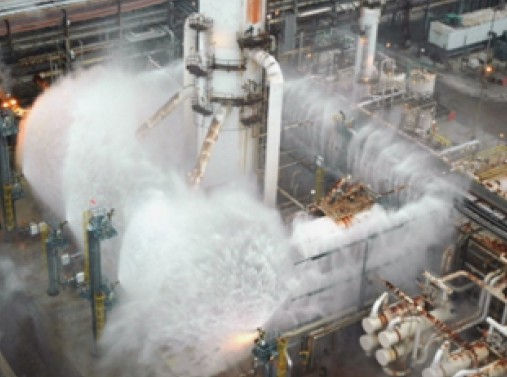
Water spray curtains
Rapid acid transfer systems
Leak detection and monitoring
These reduce risk, but do not eliminate it.
Sulfuric acid
Sulfuric acid introduces a different set of challenges:
Requires up to 400 times more catalyst volume
Increased logistics and handling
Acid regeneration produces emissions
Larger equipment footprint
Risk shifts, but complexity increases.
Real incidents that changed the conversation
In 2019, a major explosion occurred at the Philadelphia Energy Solutions refinery following a release in the alkylation unit. The facility shut down and later filed for bankruptcy.
Other incidents include:
Torrance refinery explosion (2015)
Superior refinery explosion (2018)
S-Oil refinery explosion (2022), resulting in fatalities and injuries

The hierarchy of controls, simplified
The hierarchy of controls ranks safety strategies:
Elimination
Substitution
Engineering controls
Administrative controls
PPE
Most alkylation systems operate in the lower tiers.
The hazard is still present. It is being managed, not removed.

The industry shift toward safer alternatives
The conversation is evolving.
Instead of asking how to manage acid catalysts more effectively, the focus is shifting toward removing them altogether.
A different approach: composite ionic liquid alkylation
Ionikylation replaces traditional acid catalysts with a composite ionic liquid catalyst.
This catalyst:
Has near-zero vapor pressure
Does not form airborne toxic clouds
Remains contained in a liquid state
Key advantages
Safety
Eliminates vapor cloud risk
Removes dependence on hazardous acids
Operations
No need for complex mitigation systems
Reduced monitoring and intervention
Cost
Uses standard materials of construction
Lower capital and retrofit cost
Performance
Produces alkylate with RON ≥ 96
Stability
No acid runaway conditions
Proven at commercial scale

Ionikylation has:
20+ years of development
12+ years of operation
7 commercial units globally
Units range from 1,200 to 7,400 barrels per day and include both new builds and retrofits.
Summary of Ionikylation units across multiple refinery installations

Clearing up common misconceptions
Alternatives are not commercially viable → False
Conversion is not feasible → Misleading
HF performance cannot be matched → False
All ionic liquids are the same → False
HF risks are fully mitigated → Misleading
Safety vs cost is a tradeoff → False
For a deeper breakdown of each of these points, you can download the full whitepaper.
What this means for the industry
If adopted, the proposed rule will reduce pressure to evaluate safer technologies.
However:
The risks of existing systems remain
Proven alternatives are now available
The bigger shift
For decades, refinery safety has focused on controlling hazardous systems.
Now the industry is beginning to ask whether those hazards should exist at all.
Final thoughts
The debate is often framed as safety versus competitiveness.
That framing no longer holds.
Technology now allows both to improve at the same time.
The real question is how quickly the industry moves.

Looking ahead
Refiners evaluating future alkylation strategies will need to balance safety, cost, and long-term operational risk more carefully than ever.
This article provides a high-level overview, but the full analysis goes deeper into regulatory implications, technical comparisons, and commercial data.
Get the Full Technical Breakdown
A detailed 22-page analysis covering regulatory changes, alkylation risks, and commercially proven alternatives.
Inside the full report:
Detailed breakdown of the EPA RMP 2026 proposed rule
Technical comparison of HF, sulfuric acid, and composite ionic liquid alkylation
Real-world incident analysis and risk implications
Commercial deployment data and performance benchmarks
Clarification of common industry misconceptions
Instant access to the full report
No spam. Just valuable insights.


